

Hey there! As a supplier of 202 BA Stainless Steel Sheet, I often get asked about the maximum bending angle for this material. So, I thought I'd write this blog to share some insights on this topic.
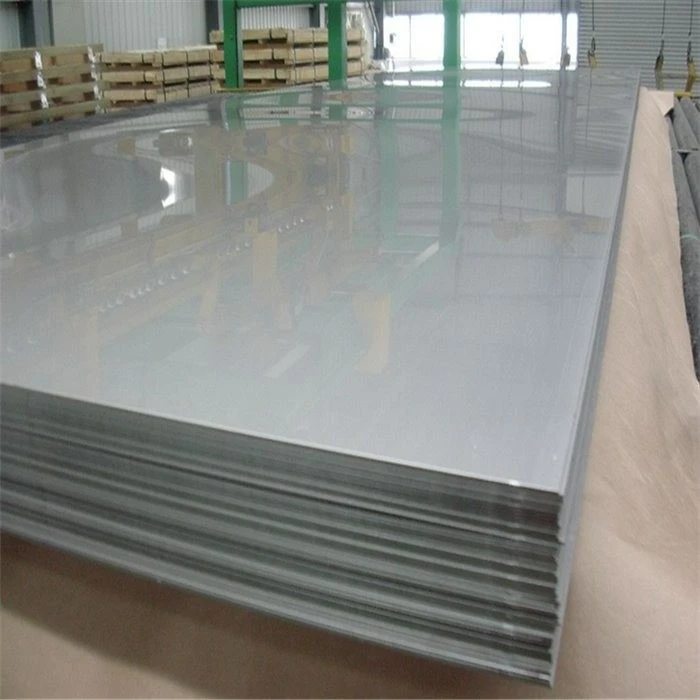
First off, let's understand what 202 BA Stainless Steel Sheet is. BA stands for Bright Annealed, which gives the stainless - steel sheet a smooth and shiny surface finish. 202 stainless steel is a chromium - nickel - manganese alloy. It's a popular choice in various industries because it's relatively affordable and offers decent corrosion resistance.
Now, the maximum bending angle of 202 BA Stainless Steel Sheet isn't a one - size - fits - all answer. It depends on several factors.
Thickness of the Sheet
One of the most significant factors is the thickness of the stainless - steel sheet. Thinner sheets can generally be bent at larger angles compared to thicker ones. For instance, a very thin 202 BA Stainless Steel Sheet, say around 0.5mm thick, can often be bent close to 180 degrees without cracking. This is because the material has less mass to resist the bending forces, and the stress is distributed more evenly over the thinner cross - section.
On the other hand, if we're dealing with a thicker sheet, like 3mm or more, the maximum bending angle will be much smaller. The internal stresses in the material increase as the sheet gets thicker. When the sheet is bent, the outer surface of the bend is stretched, and the inner surface is compressed. Thicker sheets have a greater resistance to these mechanical deformations, and beyond a certain angle, cracks may start to form.
Bending Method
The method used to bend the 202 BA Stainless Steel Sheet also plays a huge role. There are different ways to bend stainless - steel sheets, such as air bending, bottoming, and coining.
Air bending is the most common method. In this process, the sheet is placed on a die, and a punch presses down on it to create the bend. The advantage of air bending is that it's relatively flexible, and different bending angles can be achieved by adjusting the depth of the punch. However, the accuracy of the bending angle is a bit lower compared to other methods. With air bending, the maximum bending angle for 202 BA Stainless Steel Sheet can be quite large, especially for thinner sheets.
Bottoming is a more precise method. Here, the punch presses the sheet all the way down into the die, creating a very accurate bend. But this method requires more force, and it can put more stress on the material. So, the maximum bending angle might be slightly less than what can be achieved with air bending, especially for thicker sheets.
Coining is the most precise but also the most force - intensive method. It involves squeezing the sheet between the punch and the die to create a sharp, accurate bend. Due to the high forces involved, the risk of cracking is higher, and the maximum bending angle is often the most restricted compared to the other two methods.
Quality of the Stainless - Steel Sheet
The quality of the 202 BA Stainless Steel Sheet itself matters a great deal. A high - quality sheet with a uniform composition and good metallurgical properties will be more ductile. Ductility is the ability of a material to deform under tensile stress without breaking. Sheets with better ductility can be bent at larger angles.
If the sheet has impurities or inhomogeneities in its structure, these can act as stress concentrators. When the sheet is bent, the stress will be concentrated at these points, increasing the likelihood of cracking. So, it's always important to source 202 BA Stainless Steel Sheet from a reliable supplier.
Annealing Process
Annealing is a heat - treatment process that can improve the ductility of the stainless - steel sheet. By heating the sheet to a specific temperature and then cooling it slowly, the internal stresses in the material are relieved, and the grain structure is refined.
If a 202 BA Stainless Steel Sheet has been properly annealed, its maximum bending angle can be significantly increased. However, it's essential to follow the correct annealing procedure. Improper annealing can actually have the opposite effect and make the material more brittle.
Industry Standards and Applications
In some industries, there are specific standards for the bending of stainless - steel sheets. For example, in the automotive industry, parts made from 202 BA Stainless Steel need to meet strict quality and performance requirements. The bending angles need to be carefully controlled to ensure the safety and functionality of the parts.
In architectural applications, the appearance of the bent stainless - steel sheet is also crucial. So, the bending angles should be chosen in a way that doesn't compromise the aesthetic appeal of the final product.
If you're interested in other types of stainless - steel plates, check out these links. AISI 410 Stainless Steel Plate Sheet, 303 Stainless Steel Plate, Hot Rolled Stainless Steel Plate 201 430 410 202 304 316l Stainless Steel Plate, 2205 Stainless Steel Plate, and 316h plate.
Determining the Maximum Bending Angle
To accurately determine the maximum bending angle for a particular 202 BA Stainless Steel Sheet, it's often a good idea to conduct some test bends. Take a small sample of the sheet and use the same bending method and equipment that you'll use for the actual production. Start with a small bending angle and gradually increase it until you notice the first signs of cracking.
Also, you can consult with a metallurgical engineer or someone with extensive experience in stainless - steel bending. They can analyze the specific properties of the sheet and provide more accurate guidance on the maximum bending angle.
Conclusion
In conclusion, the maximum bending angle for 202 BA Stainless Steel Sheet is influenced by factors such as thickness, bending method, sheet quality, and annealing process. There's no fixed number for the maximum bending angle, and it can vary widely depending on these variables.
If you're in the market for high - quality 202 BA Stainless Steel Sheet and need more information about its bending capabilities, feel free to reach out. We can discuss your specific requirements and help you find the best solution for your project. Whether you're working on a small DIY project or a large - scale industrial application, we're here to support you. Contact us for more details and let's start the procurement and negotiation process.