

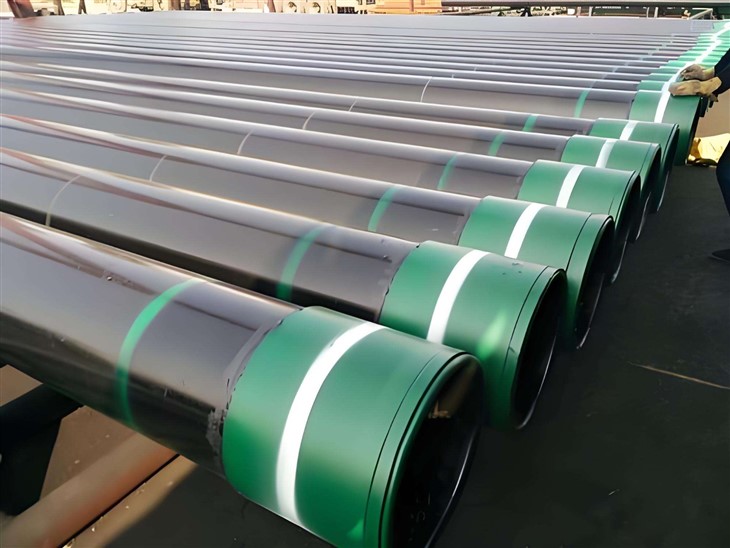
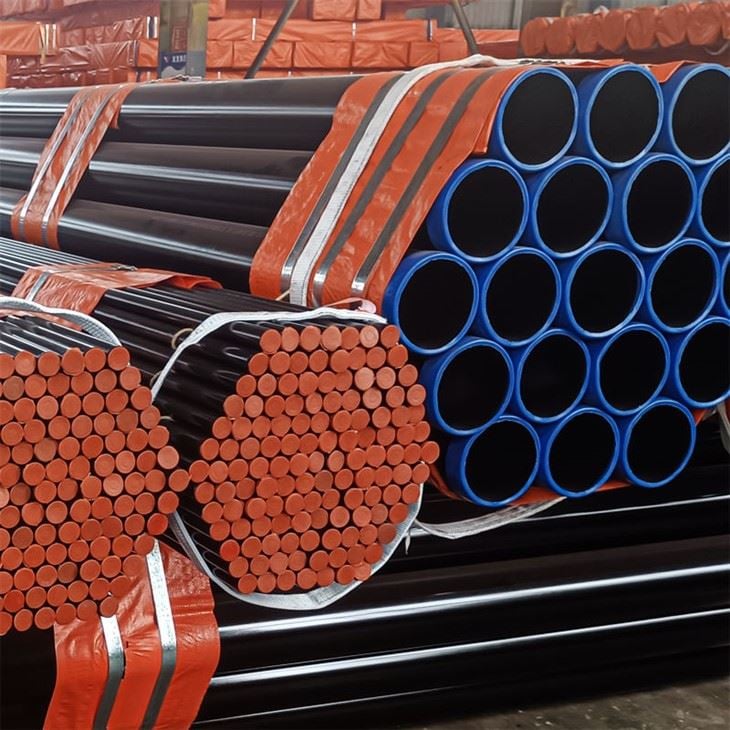
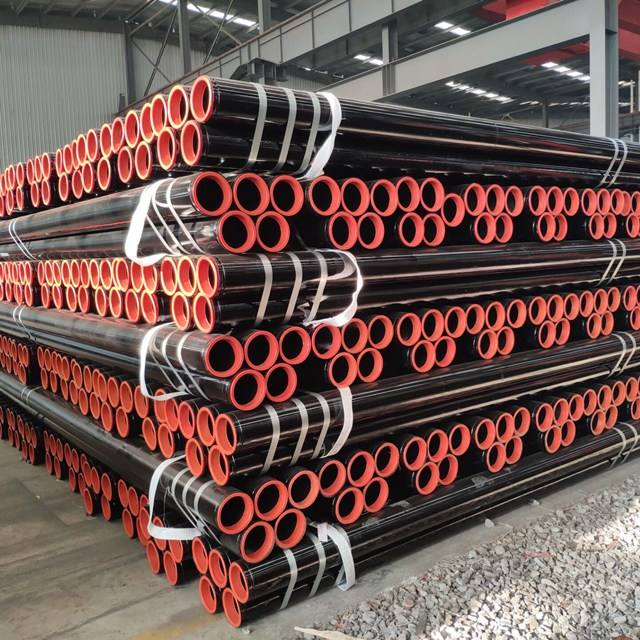
Jiangsu Cunrui Metal Products Co., Ltd. is one of the leading manufacturers and suppliers of api 5l x42 pipe in China. We are committed to providing high quality customized products made in China with competitive price. Please feel free to buy cheap api 5l x42 pipe in stock here from our factory. Also, free sample is available.
What is API 5L X42 pipe?
API 5L is a pipeline steel standard issued by the American Petroleum Institute, which stipulates the technical requirements for seamless and welded steel pipes used in the petroleum and natural gas industry for transporting fluids. Here, "X" represents pipeline steel, and "42" indicates that the minimum yield strength of this steel type is 42,000 psi (approximately 290 MPa). Therefore, X42 is also commonly referred to as L290 (corresponding to the brand name in ISO or domestic standards).
API 5L X42 PIPE is divided into two types: seamless pipe (Seamless Pipe) and welded pipe (Welded Pipe), both belonging to PSL 1 (Product Specification Level 1) category. It is suitable for routine pressure and non-severe corrosive fluid transportation scenarios and is an optimal material that balances performance and economy.


core chemical composition of API 5L X42 pipeline
The chemical composition directly determines the strength, toughness and welding performance of the pipeline. The API 5L standard has strict restrictions on the elemental content of X42 pipelines. The following are the chemical composition requirements (mass fraction, %) for PSL 1 grade and wall thickness t ≤ 25.0 mm:
| Steel grade (Steel name) | C max. | Mn max. | P max. | S max. | V max. | Nb max. | Ti max. |
|---|---|---|---|---|---|---|---|
| L290 or X42 | 0.28 | 1.30 | 0.030 | 0.030 | d | d | d |
Note:
- Unless otherwise agreed, Nb + V + Ti ≤ 0.15%
- General restrictions: Cu ≤ 0.50%, Ni ≤ 0.50%, Cr ≤ 0.50%, Mo ≤ 0.15%; Intentional addition of boron is prohibited, and the residual boron content B ≤ 0.001%
- Manganese content supplementary rules: For every 0.01% reduction in carbon content compared to the specified maximum value, the manganese content can be increased by 0.05%; For X42 pipes, the maximum manganese content can reach 1.65% (must comply with the standard upper limit requirements)
The low-sulfur and low-phosphorus design effectively reduces the risks of cold brittleness and hot brittleness in the pipeline. Meanwhile, the moderate carbon equivalent enables the X42 pipeline to have excellent on-site welding performance, eliminating the need for complex preheating or post-heating treatments, thereby significantly reducing construction costs.
Mechanical properties of API 5L X42 pipeline
Apart from chemical composition, mechanical properties are the key to ensuring the safe operation of pipelines. The API 5L standard has clear requirements for the core performance indicators of X42 pipelines:
- Yield strength: ≥ 290 MPa (42,000 psi)
- Tensile strength: ≥ 415 MPa (60,000 psi)
- Elongation: ≥ 21% (measured according to standard specimens)
- Shake-off impact toughness: According to the requirements of the operating environment temperature, reports of normal temperature or low-temperature impact tests can be provided to ensure the pipeline's anti-fracture ability in cold regions.
These properties enable API 5L X42 pipelines to withstand the internal pressure, external loads and environmental stresses during fluid transportation, while also having good plastic deformation capabilities, avoiding the cracking risk caused by local stress concentration.
Application Scenarios
- Oil and gas transportation: Long-distance trunk and branch pipelines for medium and low-pressure crude oil, natural gas, and associated gases, which are commonly used pipe materials in onshore oil and gas field development.
- Municipal and industrial fluid transportation: Water supply and drainage, industrial wastewater, steam, compressed air, etc., for non-corrosive fluid network systems.
- Oil and gas gathering and transportation systems: Gathering pipelines and water injection pipelines within oil fields, suitable for the gathering and transportation needs of conventional conditions.
- Pipeline engineering and structural pipes: Some low-pressure structural supports, pile pipes, etc., scenarios can also choose X42 pipes as an alternative to ordinary carbon steel.

Seamless vs. Welded: A Comparison of API 5L X42 Pipeline Selection Options
API 5L X42 pipes are available in two types of manufacturing processes: seamless and welded. They are suitable for various project requirements.
| Feature | Seamless Pipe | Welded Pipe |
|---|---|---|
| Manufacturing Process | Produced by piercing a solid round billet, then hot-rolled or cold-drawn. No weld seam present. | Formed by rolling steel plate into a tubular shape, then longitudinally welded. A weld seam is present. |
| Wall Thickness Uniformity | Slightly larger wall thickness tolerance. Typically preferred for small-to-medium diameters and heavy-wall applications. | Excellent wall thickness uniformity. Ideal for large-diameter and thin-wall applications. |
| Pressure Rating Suitability | Preferred for medium-to-high pressure applications. | Suitable for medium-to-low pressure applications. Weld seam performance is reliable after non-destructive testing (NDT). |
| Cost & Lead Time | Longer lead times and higher cost, especially for small quantities or special sizes. | Shorter lead times and more cost-effective for standard sizes in large volumes. |
For most conventional oil and gas transportation projects, X42 welded pipes that comply with API 5L standards, after undergoing non-destructive testing (UT/RT) on the welds, can fully meet the operational requirements and are a more cost-effective option.
Authority certification and quality guarantee for purchasing API 5L X42 pipes
As a pressure pipeline material, the quality of API 5L X42 pipes directly affects the safety of the project. When purchasing, the following certifications and tests should be given special attention:
- API 5L Certification: The supplier must have the license to use the API logo, and the products must be accompanied by the quality certificates as stipulated in the standards (MTC).
- Chemical Composition and Mechanical Performance Testing: Each batch of pipes must provide smelting analysis and product analysis reports to ensure that the element content, strength, and toughness meet the standard requirements.
- Non-destructive Testing (NDT): Welded pipes need to undergo ultrasonic (UT) or radiographic (RT) testing for weld seams, and seamless pipes can be subject to eddy current or ultrasonic inspection as needed to detect internal defects.
- Hydrostatic Test: Conduct pressure tests in accordance with API 5L standards to verify the pressure-bearing capacity and sealing performance of the pipes.
- Corrosion Protection Treatment: Depending on the usage environment, treatment methods such as 3PE/2PE anti-corrosion, epoxy coal tar pitch, galvanization, etc. can be selected to enhance the corrosion resistance of the pipes and extend their service life.
Why choose API 5L X42 pipeline?
- Balanced performance and reliability: Moderate yield strength, excellent weldability and toughness, suitable for most medium and low-pressure fluid transportation conditions.
- Outstanding cost-effectiveness: Compared to higher strength grade pipeline steel, X42 material has lower cost, less construction difficulty, and better overall life cycle cost.
- Comprehensive standard system: The API 5L standard is widely recognized by the global oil and gas industry. The product quality, inspection and acceptance procedures are clear, reducing project compliance risks.
- Stable and mature supply chain: There are numerous API-certified suppliers worldwide, and the supply of regular specifications of API 5L X42 PIPE is sufficient, with controllable delivery time.


If you are looking for an API 5L X42 pipeline supplier for oil and gas transportation or fluid pipeline projects, we can offer you customized specification quotations, complete quality certification documents and professional technical support. Would you like me to provide you with a list of common specifications and selection options for API 5L X42 pipelines?


