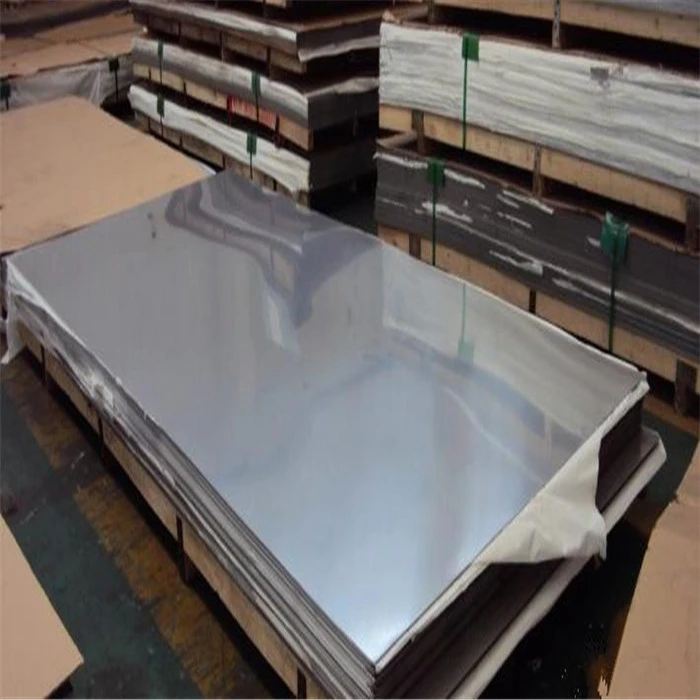
Hey there! As a supplier of 2205 stainless steel plates, I often get asked about the pitting corrosion resistance of this material. So, I thought I'd take a deep dive into this topic and share some insights with you.
First off, let's talk about what pitting corrosion is. Pitting corrosion is a form of localized corrosion that occurs when a small area of a metal surface is exposed to a corrosive environment. This can happen when there are impurities or defects in the metal, or when the metal is exposed to certain chemicals or conditions. Pitting corrosion can be a serious problem because it can lead to the failure of the metal structure, especially in applications where the metal is under stress.
Now, let's get to the main question: what is the pitting corrosion resistance of 2205 stainless steel plate? Well, 2205 stainless steel is a duplex stainless steel, which means it has a two-phase microstructure consisting of austenite and ferrite. This unique microstructure gives 2205 stainless steel some excellent properties, including high strength, good weldability, and, most importantly, excellent pitting corrosion resistance.
The pitting corrosion resistance of 2205 stainless steel is mainly due to its high chromium and molybdenum content. Chromium is a key element in stainless steel because it forms a passive oxide layer on the surface of the metal, which protects it from corrosion. Molybdenum, on the other hand, enhances the pitting corrosion resistance of the steel by increasing the stability of the passive oxide layer.
In addition to its high chromium and molybdenum content, 2205 stainless steel also has a relatively low carbon content. This helps to prevent the formation of chromium carbides, which can reduce the pitting corrosion resistance of the steel.
To measure the pitting corrosion resistance of 2205 stainless steel, we typically use a test called the pitting resistance equivalent number (PREN). The PREN is a numerical value that is calculated based on the chemical composition of the steel. A higher PREN value indicates better pitting corrosion resistance. For 2205 stainless steel, the PREN value is typically around 32-38, which is considered to be very good.
In real-world applications, 2205 stainless steel has been shown to have excellent pitting corrosion resistance in a variety of environments. For example, it is commonly used in the oil and gas industry, where it is exposed to harsh chemicals and high pressures. It is also used in the chemical processing industry, where it is used to make tanks, pipes, and other equipment that comes into contact with corrosive substances.
But, like any material, the pitting corrosion resistance of 2205 stainless steel can be affected by a number of factors. For example, the surface finish of the steel can have a significant impact on its pitting corrosion resistance. A smooth, polished surface is less likely to develop pits than a rough, textured surface. The temperature and pH of the environment can also affect the pitting corrosion resistance of the steel. In general, higher temperatures and lower pH values can increase the likelihood of pitting corrosion.
So, if you're considering using 2205 stainless steel plate in your application, it's important to take these factors into account. You may also want to consult with a materials expert to determine the best way to ensure the long-term performance of your 2205 stainless steel plate.
Now, let's compare 2205 stainless steel plate with some other types of stainless steel. For example, 310s stainless steel sheet is another popular type of stainless steel. While 310s stainless steel has good high-temperature resistance, its pitting corrosion resistance is not as good as that of 2205 stainless steel. Similarly, 306 Stainless Steel Plate is a common type of stainless steel, but it also has lower pitting corrosion resistance compared to 2205 stainless steel.
If you need a stainless steel plate with specific requirements, we also offer custom stainless steel plates. We can customize the size, thickness, and surface finish of the plate according to your needs.
In conclusion, 2205 stainless steel plate has excellent pitting corrosion resistance, thanks to its unique duplex microstructure and high chromium and molybdenum content. It is a great choice for applications where pitting corrosion is a concern, such as in the oil and gas, chemical processing, and marine industries. If you're interested in purchasing 2205 stainless steel plate, or if you have any questions about its pitting corrosion resistance or other properties, feel free to reach out to us. We'd be happy to help you find the right solution for your needs.
References: