

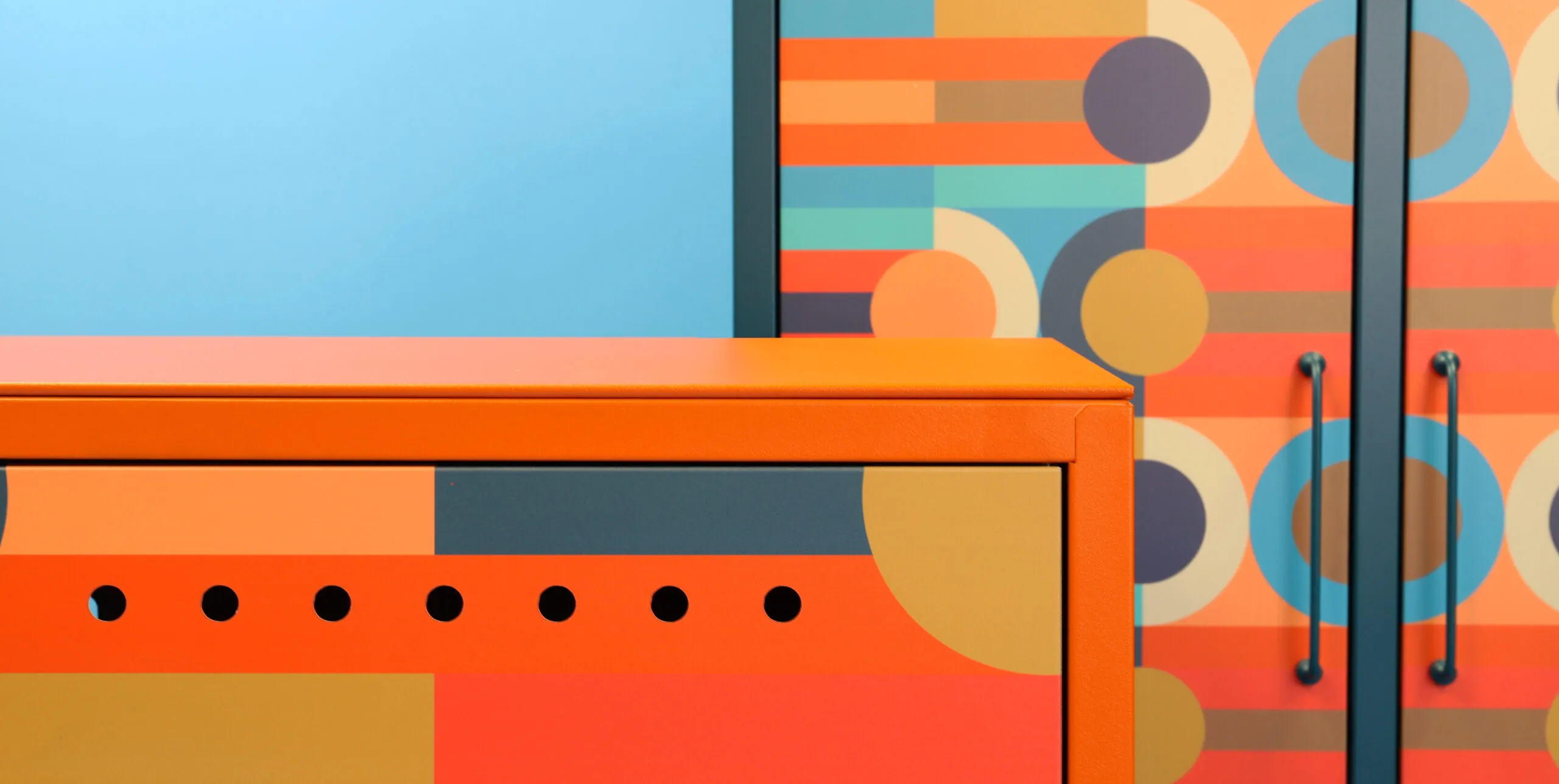
British furniture manufacturer Bisley has developed an innovative steel printing technology that simplifies the process of printing on steel while significantly improving the durability and quality of printed surfaces.
Throughout its 90-year history, British home and office furniture supplier Bisley has continuously evolved its steel-focused business to remain relevant in changing markets.
Founded in 1931, the company originally supplied metal sheets for the automotive industry. Before World War II, its business expanded into defense products, and later became widely recognized for its iconic filing cabinets and office furniture.
Today, Bisley has expanded its product color range and developed a revolutionary printing solution to attract residential consumers.
However, developing this printing technology was not easy.
Bisley design manager Mark Shatford explained:
"Printing on steel has always been challenging because of the material's unique characteristics. Unlike porous materials such as paper or wood, steel does not absorb ink and has a smooth reflective surface."
Traditional printing methods often struggle with adhesion, causing ink to move, blur, or fail to bond properly.
For furniture manufacturing, steel materials also require excellent durability because surfaces must withstand scratches, cleaning, and daily wear.
Therefore, the printed surface must not only look attractive but also maintain long-term performance.
Materials such as Cold Rolled Steel Sheet are commonly selected for decorative furniture applications because they provide excellent surface quality, dimensional accuracy, and a smooth finish suitable for further coating and printing processes.
Creating Long-Lasting Prints on Steel
To solve this challenge, Bisley worked with a local printing company in Bristol that uses the latest Swiss-designed Signracer SR-200+ flatbed printer.
This advanced digital printing process uses low-VOC UV-curable inks that are cured through high-efficiency LED technology.
Compared with traditional curing methods, LED curing generates less heat and consumes less energy.
"We first provide the printing company with steel sheets that have already been coated with primer," Shatford explained.
"This helps improve adhesion during printing and supports later steel forming processes."
The printing process begins with two layers of environmentally friendly UV-curable white ink to create strong color coverage.
A wide color gamut system using CMYK combined with dedicated orange and purple inks then creates bright and detailed patterns.
For high-quality decorative steel products, Pre Painted Steel Sheet technology provides an effective solution by combining surface protection with aesthetic design.
After printing, each cabinet door receives the same process on the reverse side, creating a high-resolution finish that is resistant to scratches and fading.
Precision Processing After Steel Printing
After printing is completed, the panels return to Bisley for forming operations.
To prevent damage during processing, the company uses specialized protective tape that keeps the printed surface smooth during steel bending while preventing scratches from manufacturing tools.
This method helps overcome previous issues where printed coatings could slightly separate during forming.
Instead of welding, Bisley uses high-strength adhesives to install reinforcement ribs because the printed surface cannot undergo additional heat treatment after printing.
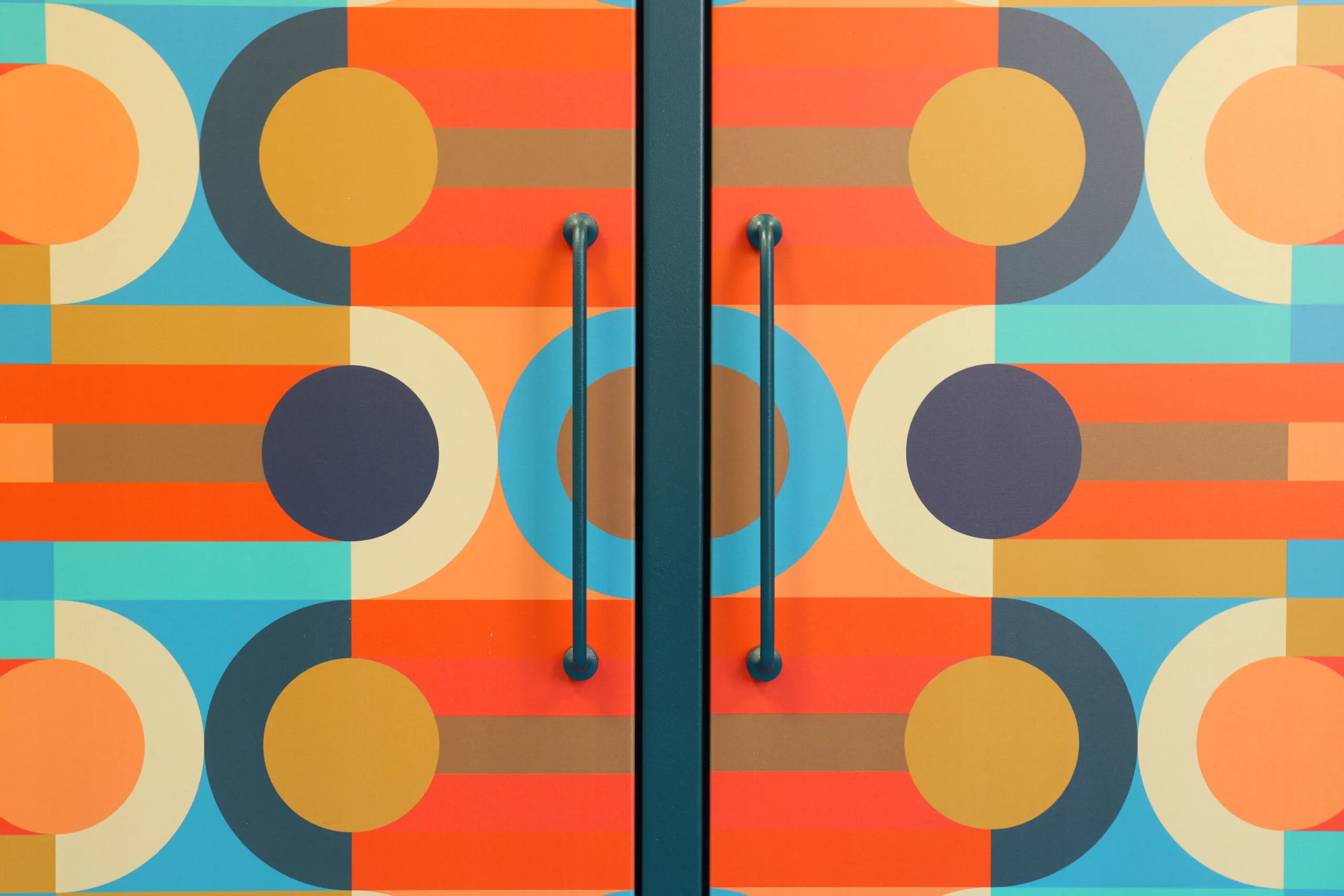
To maintain accurate pattern alignment, two cabinet doors are positioned together and printed simultaneously through one printing operation.
This combination of printing technology and precision manufacturing demonstrates the importance of accurate steel processing.
Products such as Precision Steel Sheet are widely used in applications requiring strict dimensional control, excellent surface quality, and reliable forming performance.
Bisley Collaborates with RISOTTO Studio
To demonstrate its new steel printing technology and show how high-resolution graphics can be applied to functional steel furniture while maintaining quality and durability, Bisley collaborated with Scottish design company RISOTTO Studio.
RISOTTO Studio created a series of limited-edition printed designs for Bisley furniture.
"The collaboration with RISOTTO Studio brought this process to life," said Shatford.
"We applied vibrant graphics and patterns to steel sheets in a way we had never done before."
Using wide color gamut technology with CMYK plus dedicated orange and purple inks, combined with two layers of white base ink, the company achieved highly accurate color reproduction.
The final result features bold patterns, rich colors, and a high-gloss finish.
From Industrial Material to Creative Surface
"The unique aspect is that we now control the entire process from start to finish: from blanking, priming, and printing to forming and final assembly."
This level of control allows the company to repeat the process with consistent quality, although the technology is currently limited to small production batches.
The ability to directly print on steel surfaces not only helps Bisley expand its product range but also creates opportunities to collaborate with more brands, designers, and artists.
As decorative manufacturing continues to evolve, steel is becoming more than an industrial material.
With advanced processing technologies, materials such as Steel Sheet Metal, Carbon Steel Sheet, and Precision Steel Sheet can combine functionality, durability, and artistic expression.
Bisley's innovation demonstrates how modern steel processing can transform ordinary steel surfaces into creative products with long-lasting value.