

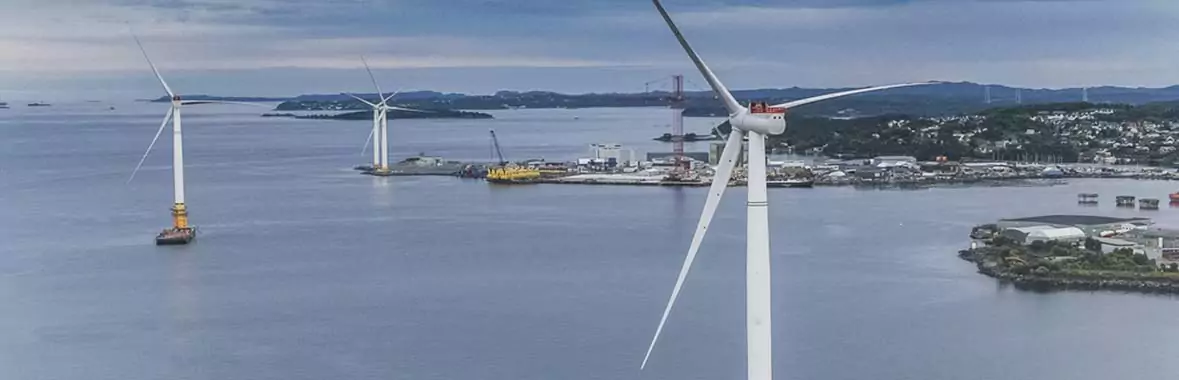
As countries around the world accelerate the transition toward renewable energy, offshore wind power is becoming one of the fastest-growing sources of clean electricity. Among the latest innovations in the sector, floating wind farms are attracting significant attention for their ability to unlock wind resources in deep-water locations previously inaccessible to conventional offshore turbines.
One of the pioneering projects in this field is the Hywind floating wind farm, developed off the coast of Scotland. The project represents a major milestone in offshore renewable energy by combining proven offshore engineering technologies with modern wind power generation.
Unlike traditional offshore wind farms that require fixed foundations installed on the seabed, floating wind turbines are mounted on large steel-supported floating structures anchored to the ocean floor. This approach allows turbines to operate in much deeper waters where wind conditions are often stronger and more consistent.
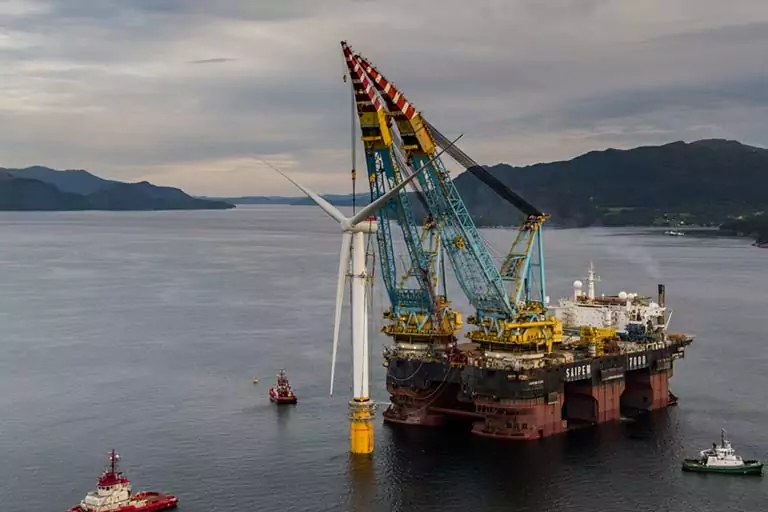
The success of floating wind technology depends heavily on the reliability of engineering materials.
Offshore environments expose structures and equipment to some of the harshest operating conditions in the world. Constant wave action, saltwater corrosion, wind loading, and long-term fatigue place extreme demands on foundations, support structures, piping systems, and mechanical equipment.
To ensure long-term operational safety and reliability, offshore projects rely extensively on high-performance steel products capable of withstanding these challenging conditions.
Steel plays a critical role throughout floating wind installations, from turbine support structures and anchoring systems to hydraulic equipment, mechanical assemblies, and energy infrastructure. High-strength steel materials provide the structural integrity required for continuous operation in offshore environments while helping engineers optimize weight, durability, and cost efficiency.
As floating wind technology expands globally, demand for reliable steel solutions is expected to increase significantly. Countries including the United Kingdom, Norway, the United States, Japan, and South Korea are actively investing in offshore wind projects to support long-term carbon reduction goals and energy security strategies.
At Jiangsu Cunrui Metal Products Co., Ltd., we closely monitor developments across renewable energy, offshore engineering, and power generation industries. Among the materials widely used in these sectors, alloy steel pipes remain essential for various offshore and energy-related applications due to their excellent mechanical properties, pressure resistance, and long-term reliability.
Alloy steel pipes are commonly utilized in power generation facilities, hydraulic systems, process piping, offshore engineering projects, and other demanding industrial environments where strength and durability are critical.
The Hywind project demonstrates that innovation in renewable energy is not only driven by advanced technology but also by dependable engineering materials. As floating wind farms continue to evolve and expand worldwide, high-quality steel products will remain a key foundation supporting the future of sustainable energy infrastructure.
By combining engineering innovation with proven material performance, floating wind technology is helping create a cleaner and more resilient energy future for generations to come.